MUNICH QUANTUM SOFTWARE COMPANY

Hardware Scales,
Software Breaks

System Software for Quantum Computing:
From the Metal to the User

Quantum computing is becoming a reality. But as hardware scales, the gap between quantum processors and end users keeps growing.

MQSC closes this gap.

We build the system software layer that connects the metal to the user: through hardware interfaces, fault-tolerant compilation with real-time execution, and orchestration within existing hyperscaler stacks and HPC centers.

Open. Vendor-neutral. Performance-driven.

Explore our products
  • Hyperscalers
  • HPC Centers
MQSC connects HPC centers and hyperscalers to quantum hardwareHPC centers and hyperscalers connect through MQSC software to five quantum hardware technologies. QDMI shows each technology’s connection in turn. In the QDMI view, MQSC connects through QDMI to the devices. The compiler lowers a program gate into operations for the superconducting device. Orchestrator receives jobs from Kubernetes and Slurm, dispatches them across all five technologies through shared admission, and returns results to both workflows.URzRyRzKubernetesSlurmShared Access
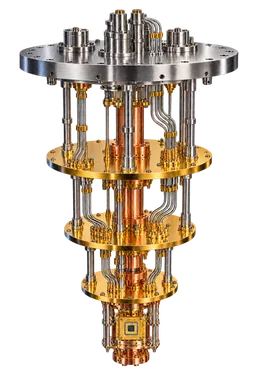
  • Super­conducting
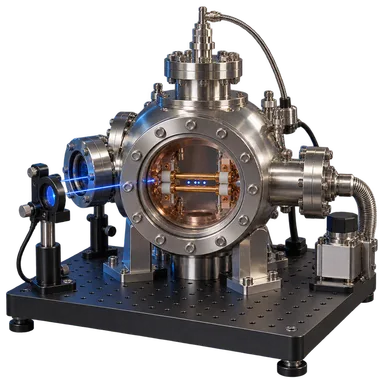
  • Trapped Ions
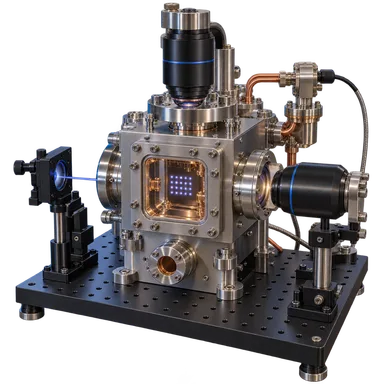
  • Neutral Atoms
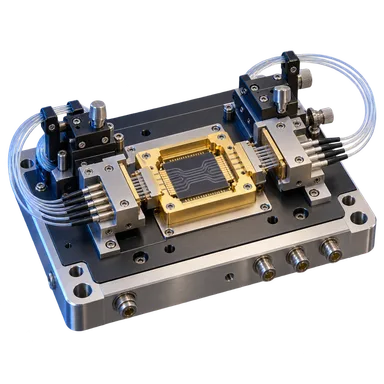
  • Photonics
  • Spin Qubits

The MQSC Orchestrator makes a fleet of different QPUs behave like any other accelerator resource in a hyperscaler stack or high-performance computing (HPC) center. Users can access quantum resources through the workflows, schedulers, and interfaces they already know.

Explore the Orchestrator

The MQT Compiler Collection delivers performance where it matters most: right above the metal. Designed for fault tolerance from day one and based on state-of-the-art compiler infrastructure, it ensures your quantum hardware spends its time computing, not waiting.

Explore the Compiler Collection

QDMI is the hardware-software interface for quantum computing: one standardized way for a device to declare what it is, what it can do, and what it costs to use right now. We build and maintain the implementation that connects your device.

Explore QDMI

The MQSC Approach

Our Principles

  • Open by Design

    The right answer won’t come from one vendor.
    It will come from everyone who runs, breaks, and improves the stack.

  • Community-Driven

    Great software does not emerge in isolation. We build in the open, contribute to the ecosystem, and bring the community together to advance quantum computing.

  • No Lock-Ins

    We don’t build hardware, so we have no reason to lock you into any.
    Write once, run anywhere. No lock-in. Not even to us.

  • From Research to Practice

    We turn scientific advances into software for real hardware, real constraints, and real workloads.

  • Performance, Every Time

    High performance is a requirement, on every run and at every layer.
    We build from the metal up to meet that standard.

Our Highlights

  • We have 15+ Years of experience

  • Rests on 200+ Scientific publications

  • Our team has won 20+ International awards

  • Trusted by the Community

    MQT PyPI Downloads
    4.5M
    MQT GitHub Stars
    1,371
    Scientific Citations
    10,000+
  • Actually Deployed

    Production-grade software deployed and maintained at hardware providers, HPC centers, and hyperscalers.

  • Building an Ecosystem

    Driving open-source projects, standards, and community initiatives such as MQSF.

Products

QDMI

Easy integration for your quantum devices.

Every quantum platform comes with its own capabilities and operational characteristics. QDMI (the Quantum Device Management Interface) provides the standardized, open-source, and vendor-neutral way for software to discover, access, and manage quantum devices.

Through it, devices can communicate not only how they are accessed, but also what capabilities they provide, what resources are currently available, and how they should be utilized.

MQSC develops, tests, and maintains QDMI implementations for quantum hardware providers, cloud services, and HPC environments, ensuring seamless integration into the growing quantum software ecosystem.

One Interface, Multiple Backends

Frontend examples

Qiskit
PennyLane
CUDA-Q
QIR
Cirq
QDMIQuantum Device Management Interface
Open Example Implementations
IQM

Connect IQM hardware through IQM’s QDMI implementation.

IBM Quantum

QDMI integration for IBM Quantum hardware.

Amazon Braket

Access Amazon Braket hardware and simulators through QDMI.

Simulation Engines

Run quantum programs with DDSIM, MQT’s decision diagram-based simulator, through QDMI.
MQT Compiler Collection

Built on MLIR. Designed for quantum. Ready for fault tolerance.

Built on MLIR, the MQT Compiler Collection leverages modern, state-of-the-art compiler infrastructure while being designed for quantum capabilities and fault tolerance from day one.

Loops and classically controlled operations, the foundations of fault-tolerant quantum computing, remain explicit throughout the compilation flow. Repeated rounds of error correction stay loops, and corrections derived from decoder results remain runtime-controlled operations.

At the lowest layer, the compiler generates device-native schedules tailored to the actual machine and its measured parameters, whether that means scheduling pulses on superconducting devices or moving atoms in neutral-atom systems.

Magic-State Distillation

15-to-1
MQT Compiler Collection
RUSDistillT|+⟩ resourceMagic state
InjectCNOTData → resource
MeasureZ basisResource qubit
0No correction
1S correction

MQSC Orchestrator

Turn quantum processors into first‑class HPC resources.

Quantum computing should integrate into existing infrastructures, not require entirely new ones.

The MQSC Orchestrator enables quantum workloads to be executed through existing cloud and HPC schedulers and workflow managers. Quantum jobs are submitted, queued, monitored, and accounted for just like any other job, making QPUs true first‑class citizens within the computing stack.

From one QPU to an entire fleet, quantum computing becomes just another accelerator resource, seamlessly integrated into production environments.

Contact us

Quantum in Existing Workflows

Your existing workflowSlurm · Kubernetes
  1. ClassicalCompute
  2. QuantumExecute & return
  3. ClassicalContinue
MQSC OrchestratorRequest · Queue · Account
  • On-premisesDirect QPU access
  • Cloud providerQPU fleet
  • Managed stackStack as a device

MUNICH QUANTUM SOFTWARE FORUM

MQSF 2026

Building software is only part of the job.
Building the community is the other.

That’s why we organize the quantum computing software event: the Munich Quantum Software Forum — bringing together the “who’s who” of the community.

Munich, Germany

Learn more, watch recordings, explore materials from previous editions, and join the community at the MQSF.

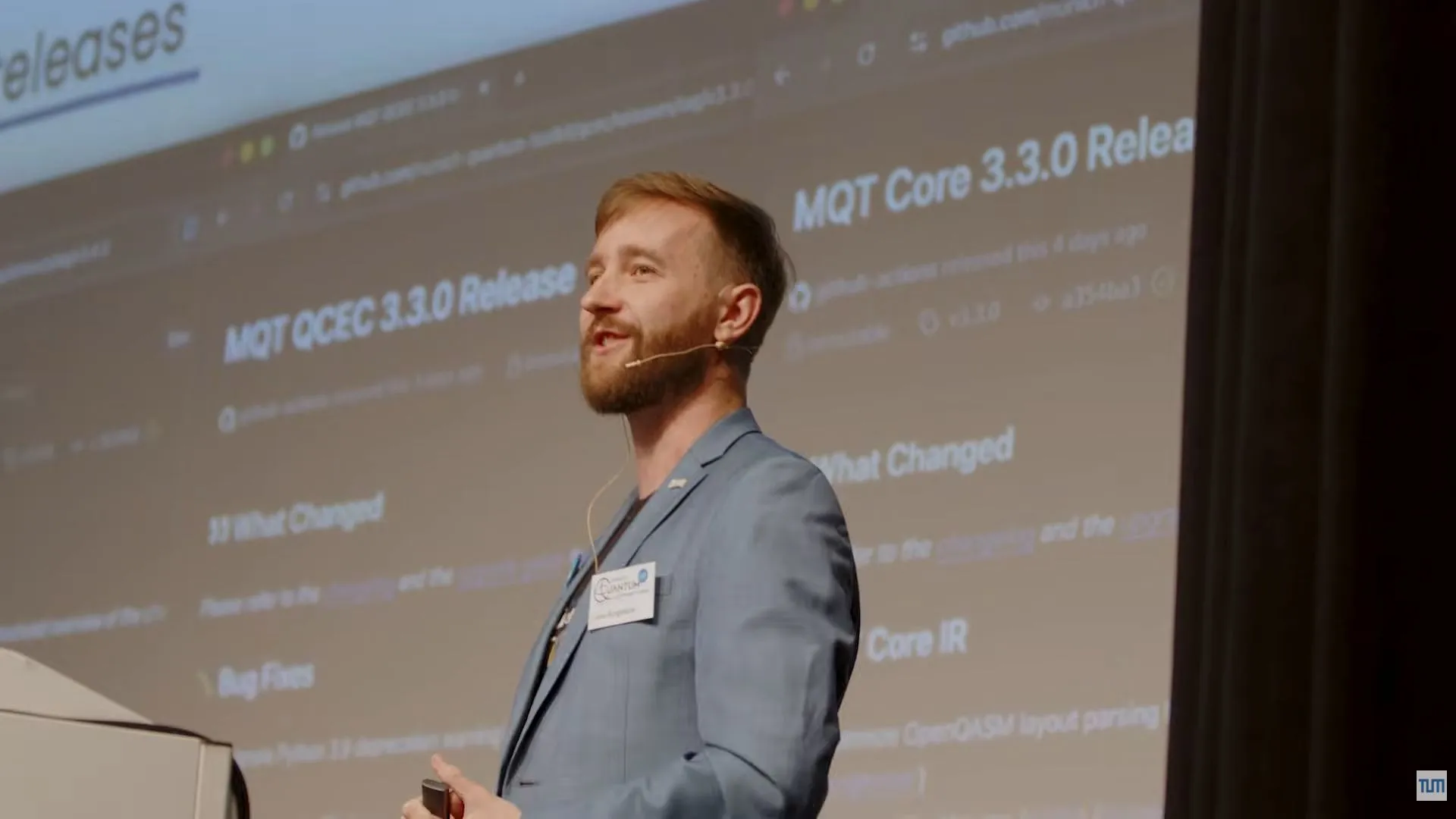
Lukas Burgholzer presenting MQT software releases at MQSF 2025
Lukas Burgholzer · MQSF 2025CDA-TUM / YouTube

MQSF 2025 Recap

Watch on YouTube

Our Team

Have questions or need more information? We’re here to help! Whether you’re interested in exploring our software tools, discovering our services, or want to know more about what we do, feel free to reach out!

Dr. Marcel Walter

Dr. Marcel Walter

Senior Quantum Software Engineer

Dr. Simon Hofmann

Dr. Simon Hofmann

Senior Quantum Software Engineer